4 min read
Oversized, Relaxed or Regular: The Three Fits Explained
Three words for t-shirt cuts and only one is standardised. What separates them in measurements rather than adjectives, and why sizing up a regular tee is not the same as buying an oversized one.
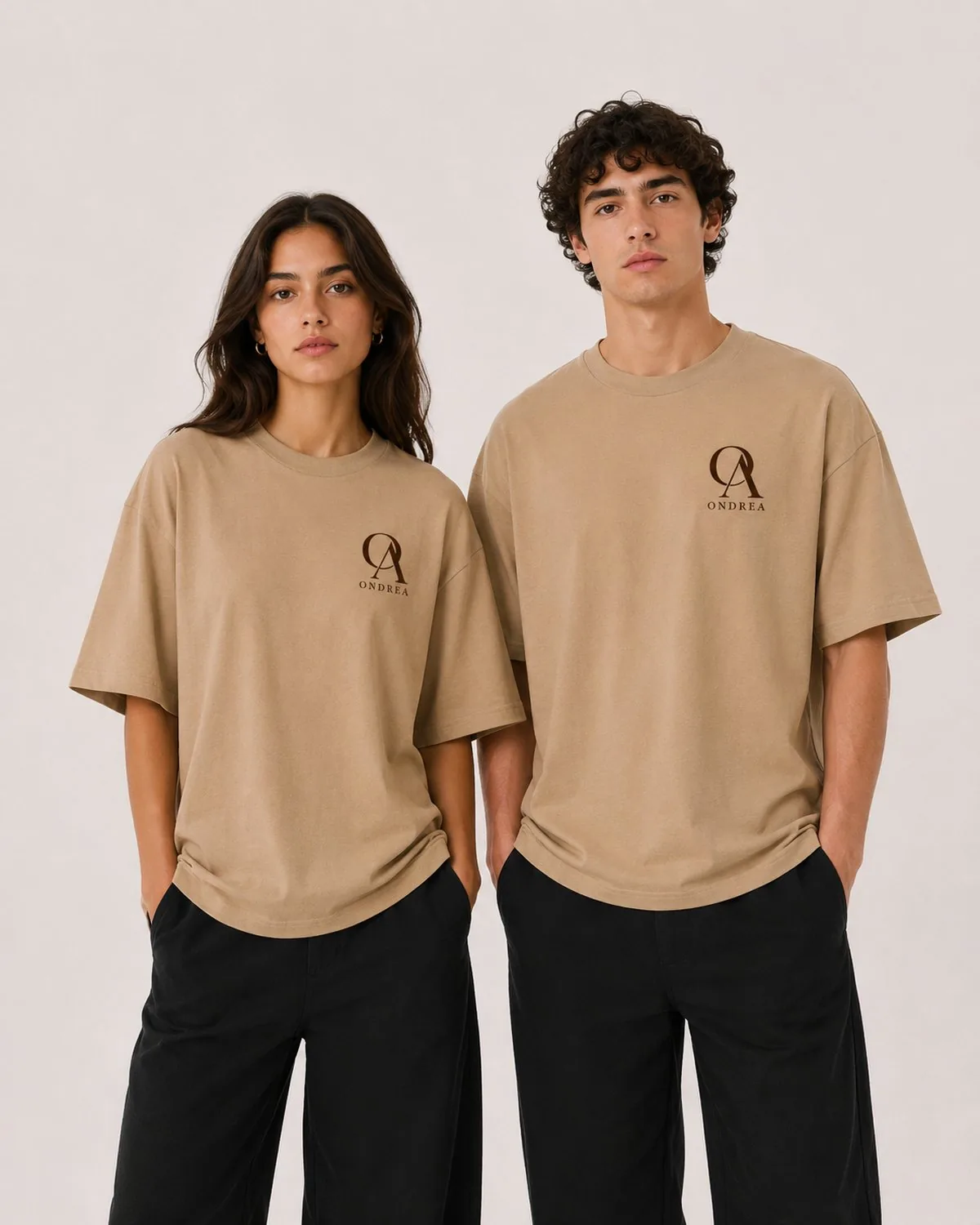
Three words get used for t-shirt cuts and only one of them is standardised. Regular, relaxed and oversized describe real differences in how a garment is patterned, but every brand draws the lines somewhere slightly different — which is why a “relaxed” tee from one label can be roomier than an “oversized” one from another.
Here is what the three actually mean, in measurements rather than adjectives.
Regular fit
The shoulder seam sits on the point of your shoulder. The body follows your torso with a couple of inches of ease and often tapers slightly toward the hem. The sleeve ends around mid-bicep.
It is the default cut of almost every t-shirt sold, and it does one thing well: it follows the shape of the person wearing it. That is also its limitation. A regular tee in thin cotton shows every line underneath it.
Relaxed fit
The shoulder seam still sits close to the shoulder — perhaps half an inch past it. The body is cut straight rather than tapered, with roughly four inches of ease through the chest. Length is usually unchanged from regular.
Relaxed is regular with the shaping removed. It reads as a normal t-shirt that happens to be comfortable, which is precisely why people buy it. It is not a silhouette; it is the absence of one.
Oversized
This is the one that is genuinely different, because the pattern changes rather than just the ease.
- Dropped shoulder. The seam sits two to four inches down your upper arm. This is the defining feature — not the width.
- Boxy body. Cut wide and straight, six inches or more of ease through the chest, with the width carried all the way to the hem instead of tapering.
- Shorter relative length. A true oversized tee is proportionally shorter than a scaled-up regular one, so it sits at the hip rather than mid-thigh. Get this wrong and the shirt reads as borrowed.
- Wider sleeve opening. The sleeve has to match the dropped shoulder or the whole thing pulls.
Why sizing up is not the same thing
Buying a regular tee two sizes larger gets you the width and none of the rest. The shoulder seam lands somewhere down your arm by accident rather than by design, the body stays tapered so it flares oddly at the hem, and the length grows with the size — so you end up with something wide, long and slightly wrong.
An oversized pattern grades those measurements independently. That is the entire difference, and it is why a properly cut oversized medium looks nothing like a regular XL.
Where fabric weight comes into it
Volume only works if the cloth can hold it. A boxy cut in thin jersey collapses onto the body and the silhouette disappears — you get the extra fabric with none of the shape it was cut for.
This is why heavyweight cotton and oversized cuts arrived together. At 240 GSM the fabric has enough body to stand away from you and keep the square line the pattern intends. Below about 200 GSM, an oversized tee mostly looks like a large one.
Which to choose
Regular if you want a t-shirt that follows your shape and layers under things without bulk.
Relaxed if regular has always felt slightly tight and you do not want a silhouette, just room.
Oversized if you want the shape itself — the dropped shoulder and the straight line — and are willing to have it read as a deliberate choice rather than a neutral one.
All three are correct. They are just not interchangeable, and the sizing advice for one does not transfer to another.
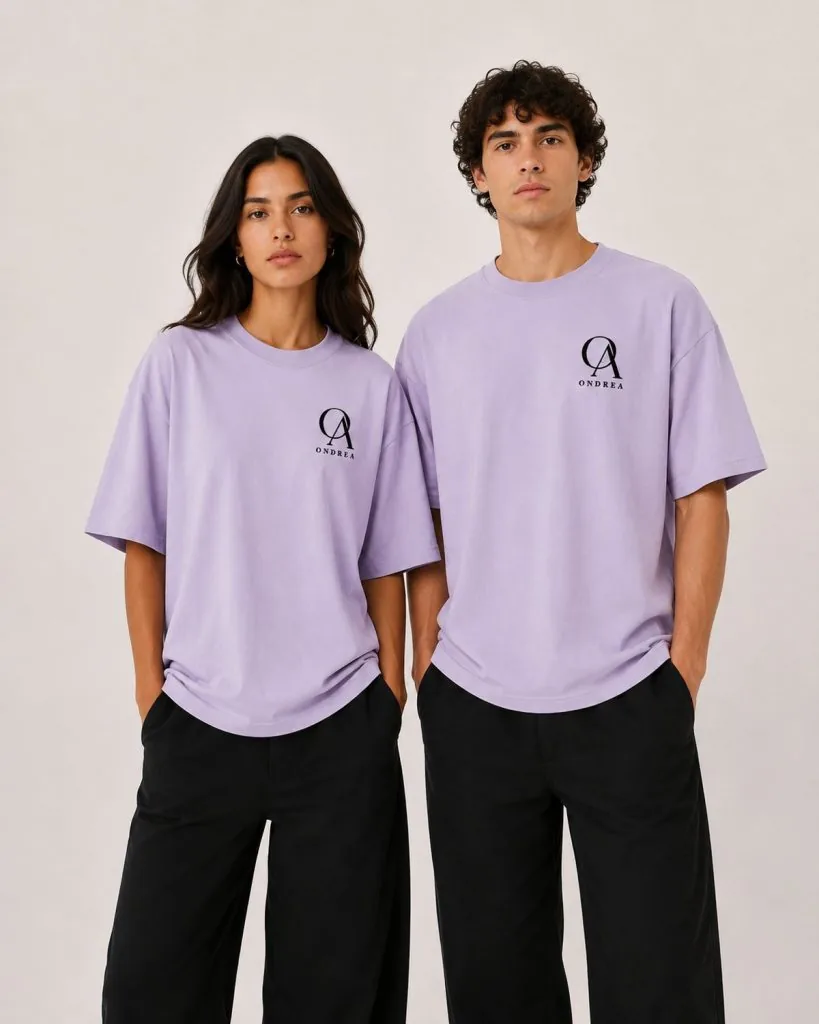
Ondrea is cut oversized throughout. How that fit should sit on you covers the four measurements to check, and the size guide has the numbers for every size.