
4 min read
Garment Dyed, and Why It Is Worth the Trouble
Dyeing a finished t-shirt rather than the cloth it is cut from is slower, costlier and less consistent. It is also why a good tee looks broken in on day one.
There are two ways to get colour into a t-shirt. You can dye the yarn or the cloth first and then cut and sew a garment out of it, or you can sew the garment first and dye the finished thing. The second is slower, more expensive and harder to control. It is also the reason a good t-shirt looks like it has been yours for years on the day you unwrap it.
The usual way
Most t-shirts are made from piece-dyed fabric. Enormous rolls of cloth are dyed to a colour, then cut into panels and stitched together. It is efficient and extremely consistent: every garment in the run is identical, and the mill can dye once and supply many factories.
The trade-off is that the colour is set before the garment exists. The seams, the collar rib and the hem were dyed as flat cloth, separately from each other, and then joined. Nothing about the finished piece has been through the dye together.
Garment dyeing
Here the t-shirt is cut and sewn first, in undyed or barely-dyed cotton, and the whole finished garment goes into the dye bath. Everything is coloured at once — the body, the sleeves, the collar rib, the stitching thread.
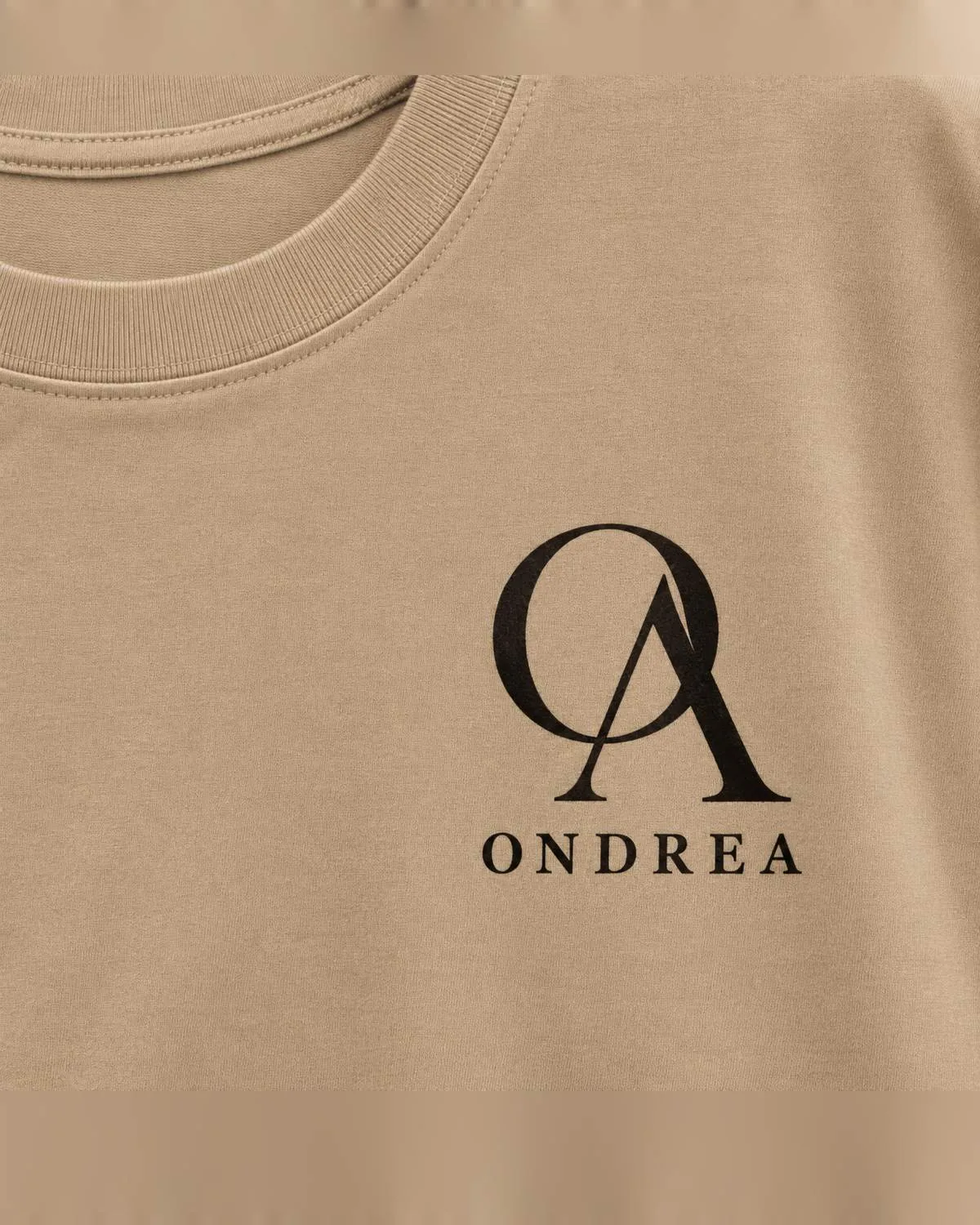
Because those components are slightly different in structure, they take the dye at slightly different rates. The rib absorbs a little differently to the body. The seams sit fractionally deeper. The overall effect is a colour with variation in it rather than a flat print, and it is why a garment dyed piece has depth that a piece-dyed one does not.
It softens the garment
A dye bath is a long, hot, agitated wash. It relaxes the cotton and takes the newness out of the cloth mechanically, not chemically. A garment dyed t-shirt arrives already broken in.
It settles rather than fades
The colour goes into the fibre of a finished garment rather than onto the surface of flat cloth. As the fabric softens with wear, the colour softens with it — evenly, gradually, across the whole piece. That is a different thing from fading, which happens on the surface and tends to go patchy.
The shrinkage happens before you own it
The garment does most of its moving in the dye bath and the drying that follows, rather than in your machine the first time you wash it.
What you give up
Honesty matters more here than salesmanship, so: garment dyeing is genuinely less consistent. Two pieces in the same colourway can differ very slightly. Batches vary. The process wastes more water and takes longer, and it costs more per garment because it happens one finished piece at a time rather than one roll of cloth at a time.
If you want two t-shirts that are pixel-identical, piece-dyed is the correct answer. We think the variation is the interesting part.
Looking after garment dyed cotton
Nothing exotic, but the basics matter more than usual:
- Wash cold. Heat is what pulls colour out.
- Turn it inside out. It protects the face of the fabric and the print at the same time.
- Skip fabric softener — it coats the fibres and dulls exactly the depth you paid for.
- Dry out of direct sunlight. Sun is harder on colour than washing is.
The full routine is on the care guide.
Which colours show it best
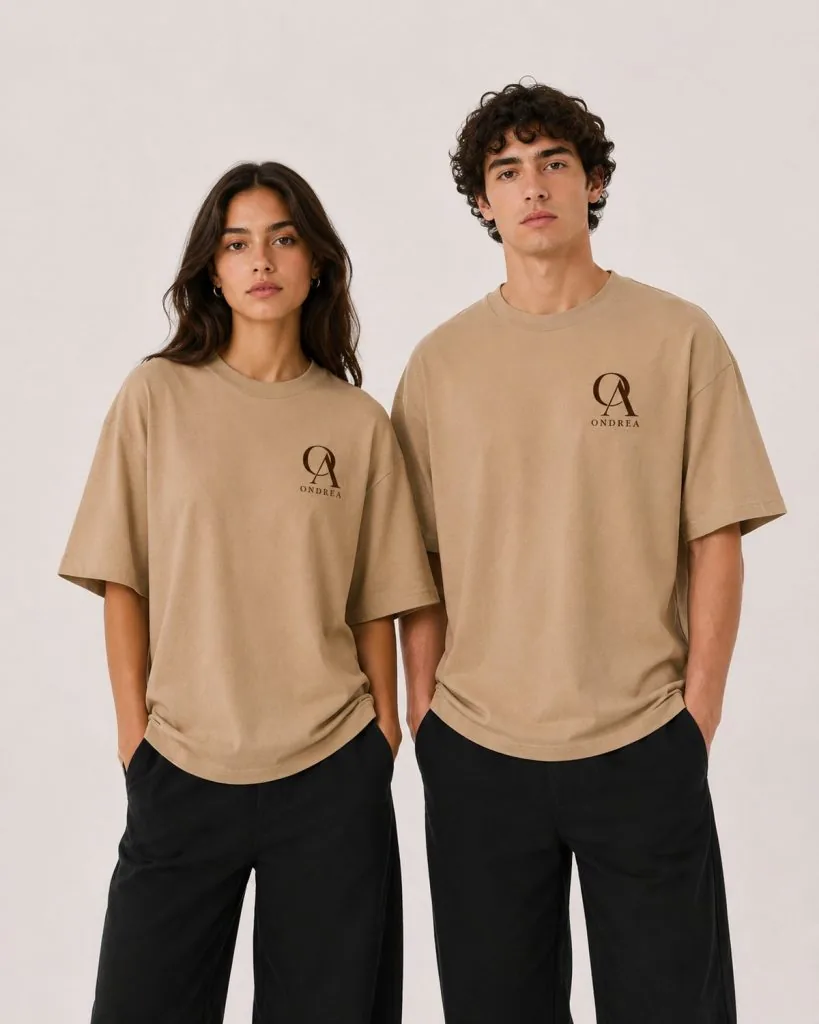
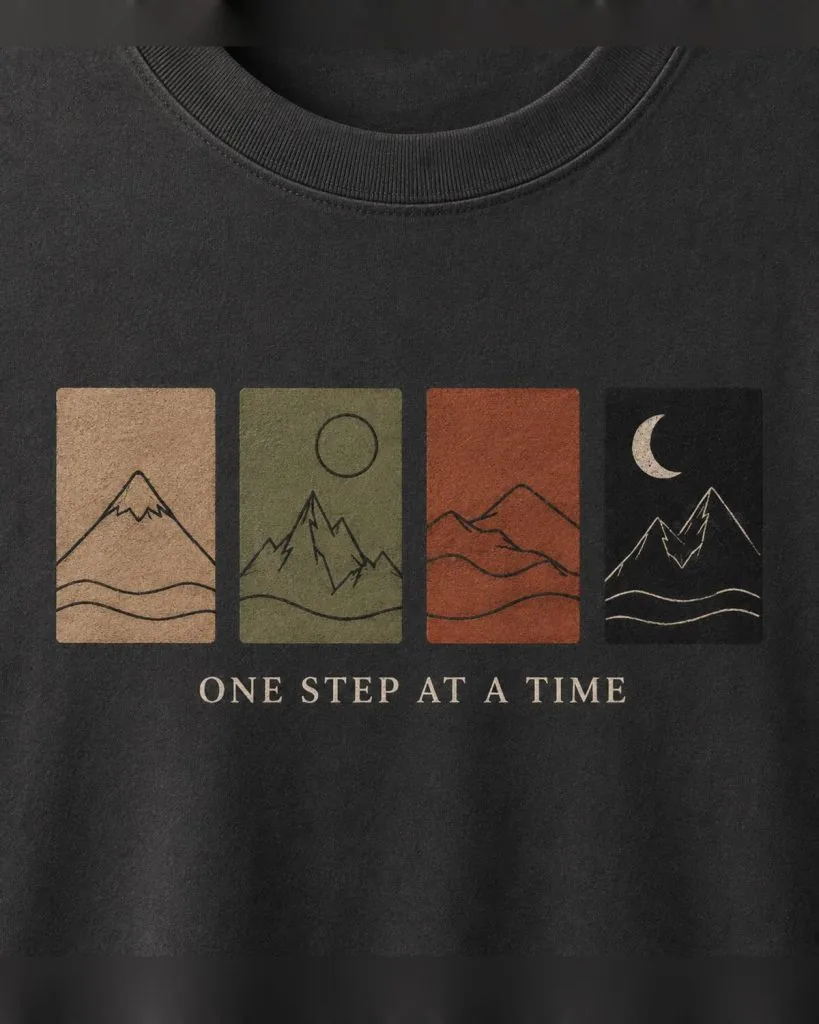
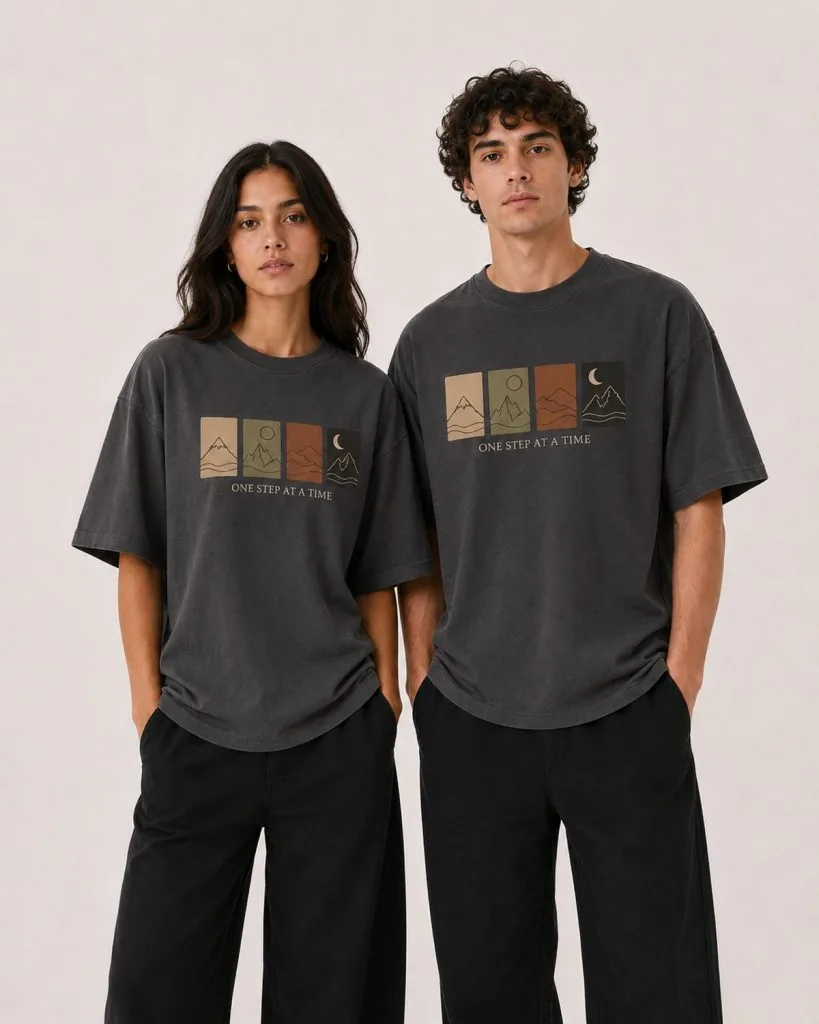
The mid-tones. Deep, slightly complicated colours have the most room for the variation to show — the washed charcoal on Long Way Up is a good example, and so is the sand on OLD Ground. Very pale and very saturated colours show it least, though it is still there in the rib and the seams if you look.
Every piece in the collection is garment dyed. None of them will look exactly like the next one, and that is deliberate.