4 min read
How an Oversized T-Shirt Should Actually Fit
A bigger size is not an oversized cut. What the four key measurements mean, how to pick your size from a t-shirt you already own, and when to size down.
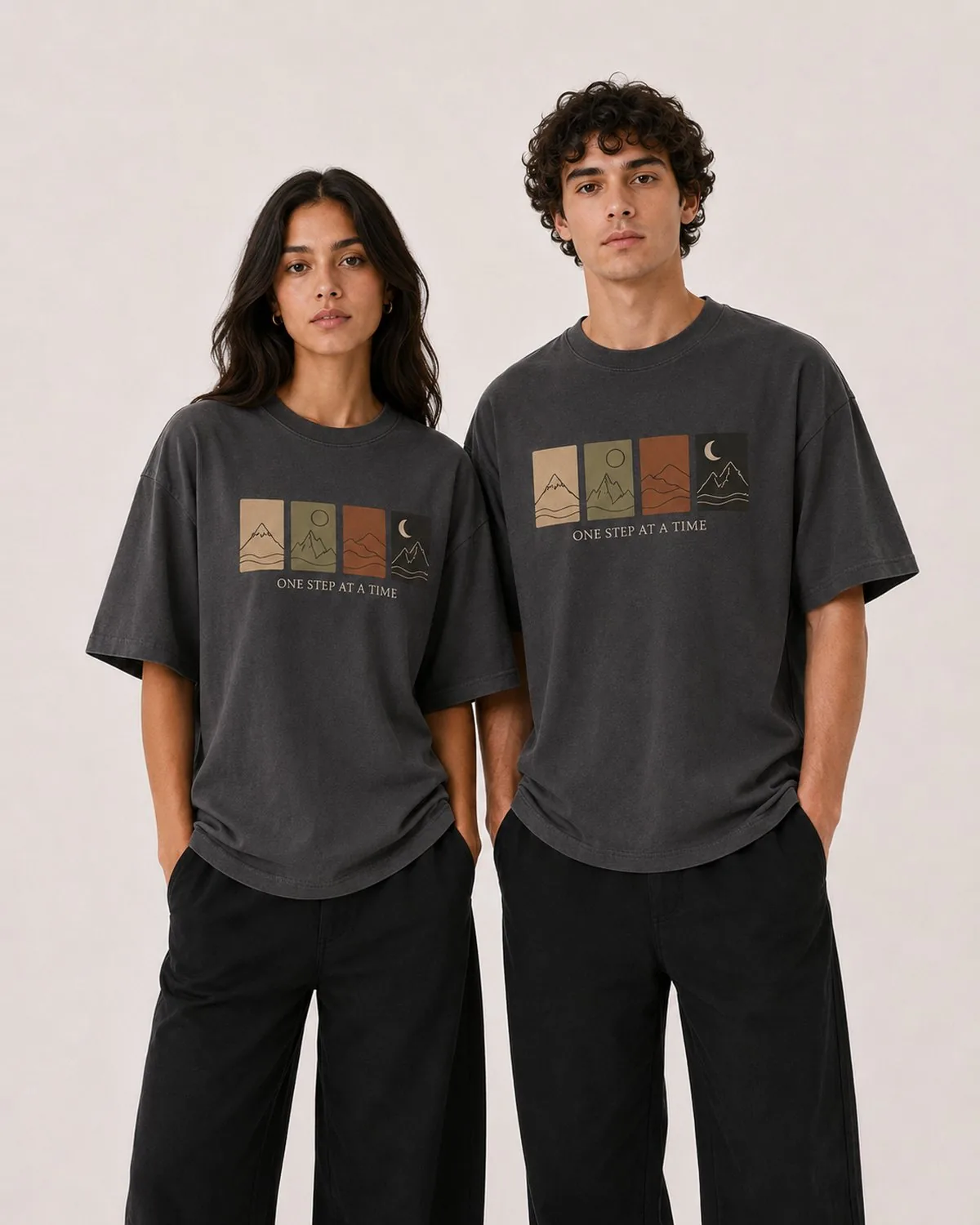
“Oversized” is doing a lot of work on product pages these days, and it means very different things depending on who printed the label. Sometimes it means a genuinely redrafted pattern. More often it means the brand took a regular t-shirt and sent you a size up. Those two things look nothing alike on a body.
A bigger size is not the same as an oversized cut
Size up in a regular t-shirt and everything grows together: the body gets wider, but the shoulder seam slides down your arm by accident, the sleeve gets longer and narrower than it should be, and the body gets longer too — so you end up with something that is baggy in the middle and still somehow tight across the back, hanging past your hip.
An oversized cut starts from a different pattern. The shoulder is drafted wide on purpose, the armhole is dropped and opened up so the sleeve hangs cleanly, and the body is cut short relative to its width. The result is square rather than long. That squareness is the whole point, and it is the thing a size-up can never fake.
The four measurements that matter
Chest
This is the one people get wrong, because there are two numbers and they are miles apart. The body chest is the person the garment is drafted for. The garment chest is the finished t-shirt measured all the way around. On an Ondrea piece the gap between them is about six inches — a size M is cut for a 40 inch chest and finishes at 46 inches around. That six inches is the oversize.
Length
Measured from the highest point of the shoulder, next to the collar, straight down to the hem. Ours run from 28.5 inches at S to 30.5 inches at XXL. That is deliberately on the shorter side: an oversized t-shirt that is also long stops reading as oversized and starts reading as a nightshirt. It should finish just below the waistband.
Shoulder
Seam to seam across the back. On a dropped shoulder this number is much wider than your actual shoulders, and it is supposed to be. If the seam sits on your shoulder bone, the cut is not oversized.
Sleeve opening
Rarely listed, and worth checking anyway. A wide body with a tight sleeve is the tell of a size-up masquerading as an oversized fit.
How to choose your size in ninety seconds
Do not measure your body. Measure a t-shirt you already own and like the fit of.
- Lay it flat on a table and smooth out the creases properly.
- Measure straight across from one underarm seam to the other.
- Double that number. That is its garment chest.
- Find the closest figure in the garment chest column of our size guide.
If the t-shirt you measured is a regular fit you like, go one to two inches above it for a comfortably oversized result. If it is already oversized and you want the same feeling, match the number.
When to size down
Take a size down if you want the shape without the volume — the dropped shoulder and the square body, but closer to you. Plenty of people at a 40 inch chest wear our S rather than the M for exactly that reason, and it still has more room than a standard tee.
Take your usual size, or up, if you want it to read as unmistakably oversized, or if you want to layer anything underneath.
A note on unisex sizing
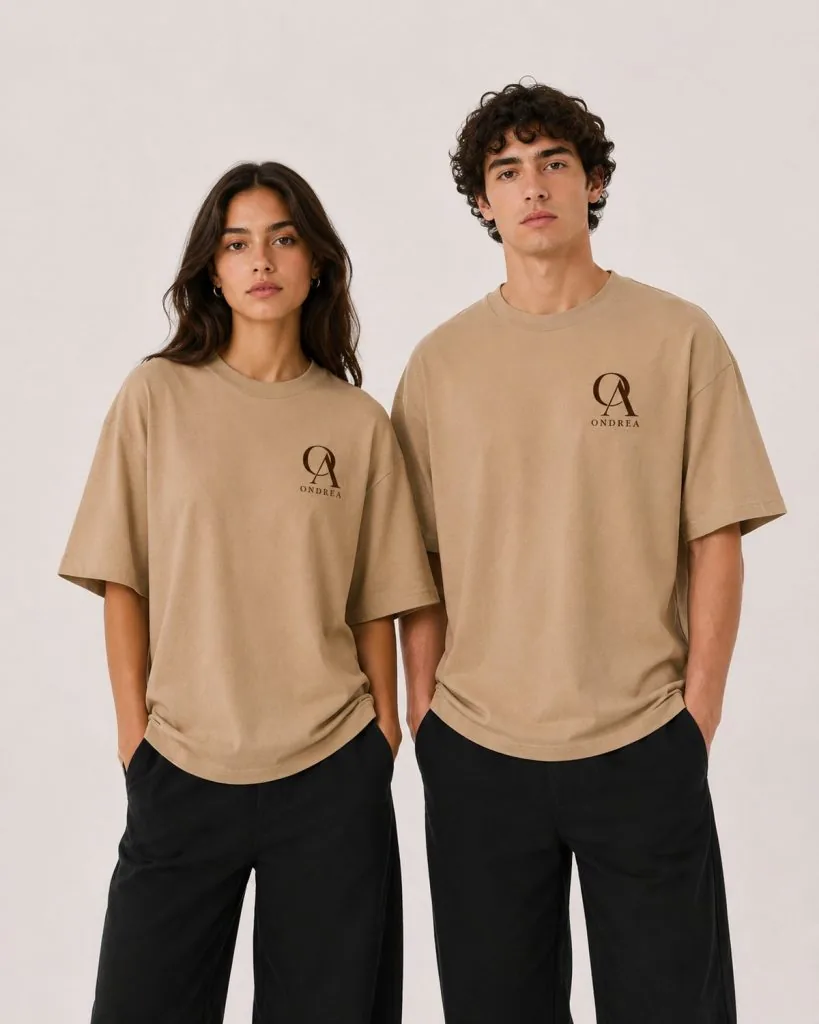
There is one block, cut oversized, in five sizes from S to XXL. It is not a men’s fit with a women’s version bolted on. Because the pattern is square and the shoulder is dropped, the same garment works across a wide range of bodies — which is the practical advantage of drafting a shape rather than a gender.
The whole collection is cut on this block, so once you know your size in one piece you know it in all of them. Have a look at the current drop, or read the answers to the questions we get most.