
4 min read
What GSM Actually Means on a T-Shirt Label
GSM is the most useful number on a t-shirt label, which is why most labels leave it off. What the ranges mean, why 240 GSM behaves differently, and how to check a claim.

Deprecated: Case statements followed by a semicolon (;) are deprecated, use a colon (:) instead in phar:///opt/homebrew/Cellar/wp-cli/2.12.0/bin/wp/vendor/react/promise/src/functions.php on line 369
GSM stands for grams per square metre. It is the weight of one square metre of the fabric, and it is the single most useful number on a t-shirt label — which is exactly why most labels leave it off.
What the numbers actually mean
Roughly, for cotton jersey and terry:
- 120–150 GSM — very light. Fast-fashion multipacks and promotional tees. You can usually see your hand through it.
- 150–180 GSM — the standard high-street t-shirt. Fine when new, thins visibly after a season.
- 180–220 GSM — a good, solid everyday t-shirt. Holds a shape.
- 220–260 GSM — heavyweight. Structured, opaque, hangs off the body instead of clinging.
- 280 GSM and up — sweatshirt territory. Warm, and heavy enough that it stops being a t-shirt.
Ondrea sits at 240 GSM. That is close to double a typical high-street basic.
Why weight changes how a t-shirt behaves
It holds its own shape
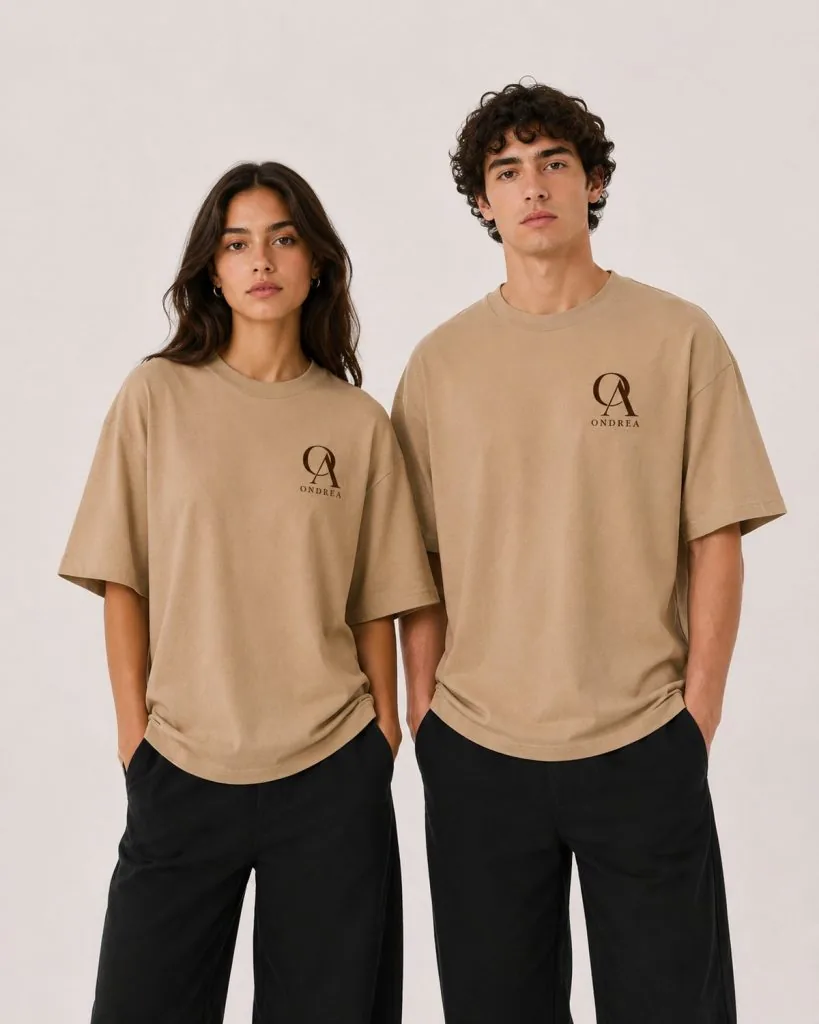
A light jersey drapes onto whatever is underneath it, which is why a thin t-shirt shows every line of your torso. Heavier cloth has enough body to stand away from you. On an oversized cut this matters more than anywhere else — the square silhouette only exists if the fabric is stiff enough to hold it.
It does not go transparent
Opacity is a function of weight. At 240 GSM a white t-shirt is genuinely white rather than faintly pink.
The collar survives
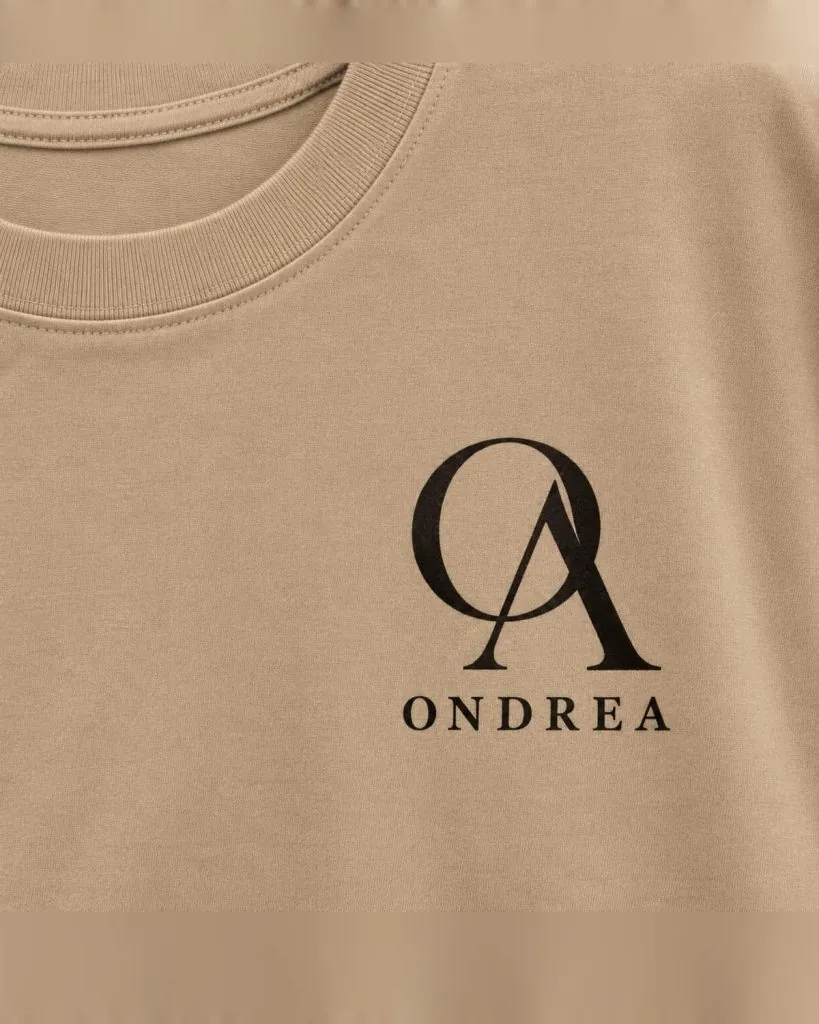
Most t-shirts die at the neck first — the ribbing gives out and the collar goes wavy long before the body wears through. A heavier garment carries a heavier rib, and a heavier rib keeps its tension for years rather than months.
It ages instead of degrading
This is the real argument for weight. A thin t-shirt gets thinner until it is finished. A heavy one softens: the hand-feel changes, the fabric relaxes, and it gets better for a long time before it gets worse.
Where French terry comes in
GSM tells you the weight but not the structure. Two fabrics at the same weight can feel completely different.
French terry is knitted with a smooth face and soft loops on the inside. It is not brushed, so it is not fleece — the loops stay as loops. That structure is what lets a 240 GSM garment stay breathable: the loops hold air and lift the fabric slightly off the skin, so it does not sit on you the way a dense flat jersey at the same weight would.
It is also why the fabric feels substantial without feeling stiff. A flat jersey at 240 GSM would be board-like. French terry at 240 GSM has give.
Is it too heavy for Indian weather?
Fair question, and the short answer is that it depends far more on fibre, fabric structure and cut than on the number itself — a 240 GSM oversized tee in 100% cotton touches much less of you than a slim 160 GSM one does.
It is a long enough answer to be its own piece: heavyweight or lightweight, honestly, for Indian conditions, including the months when the answer is genuinely no.
How to check a claim
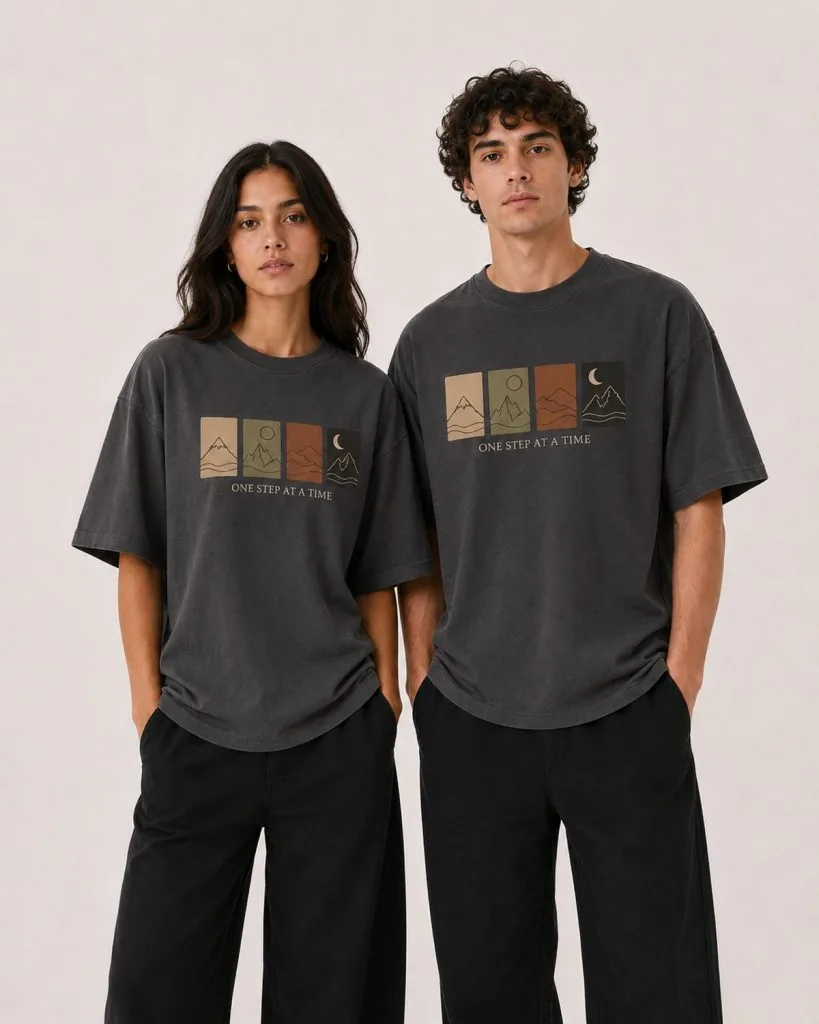
Weight is easy to state and hard to verify from a photograph, so treat an unsupported number with some suspicion. Two decent proxies: hold the fabric up to a light — heavyweight cotton blocks most of it — and look at the hem and collar in the product photography, since a heavy garment needs visibly heavier ribbing and a brand that has cut corners will show it there.
Every piece in the collection is 240 GSM French terry in 100% cotton. If you want the fabric to stay that way, the care guide is two minutes well spent.